17/12/25

Table of Contents
Outsourced Thinking
17/12/25 05:53AM
When harm occurs, blame is often shifted from the human actor to the system, even when:
intent pre-existed,
instructions were coerced,
context was missing,
or the system was misused deliberately.
This “agency inversion” distorts public understanding. Most AI-related harms originate from human actions of misuse, negligence, coercion, misinformation or deliberate manipulation.
Covered by K. Jaishankar, the Space Transition Theory proposes that individuals transition between cyberspace and the physical world act and changes their behaviour to act on repressed tendencies that they would not normally commit in the real world. AI is now a tool used to amplify existing behaviour.
The real risk is not AI Systems turning on humanity, it is the misalignment in human behaviour preceding misalignment in systems.
The end will not be loud and catastrophic. The collapse will arrive quietly, through erosion. Through moral outsourcing. Through narrative distortion and the increased abandonment of responsibility.
The end will come at our hands. Our own slow erasure. With our own hands. This is more than an issue with vibe coding.
This is about giving the capabilities of something we don’t quite understand to the world. Morality and constraint.
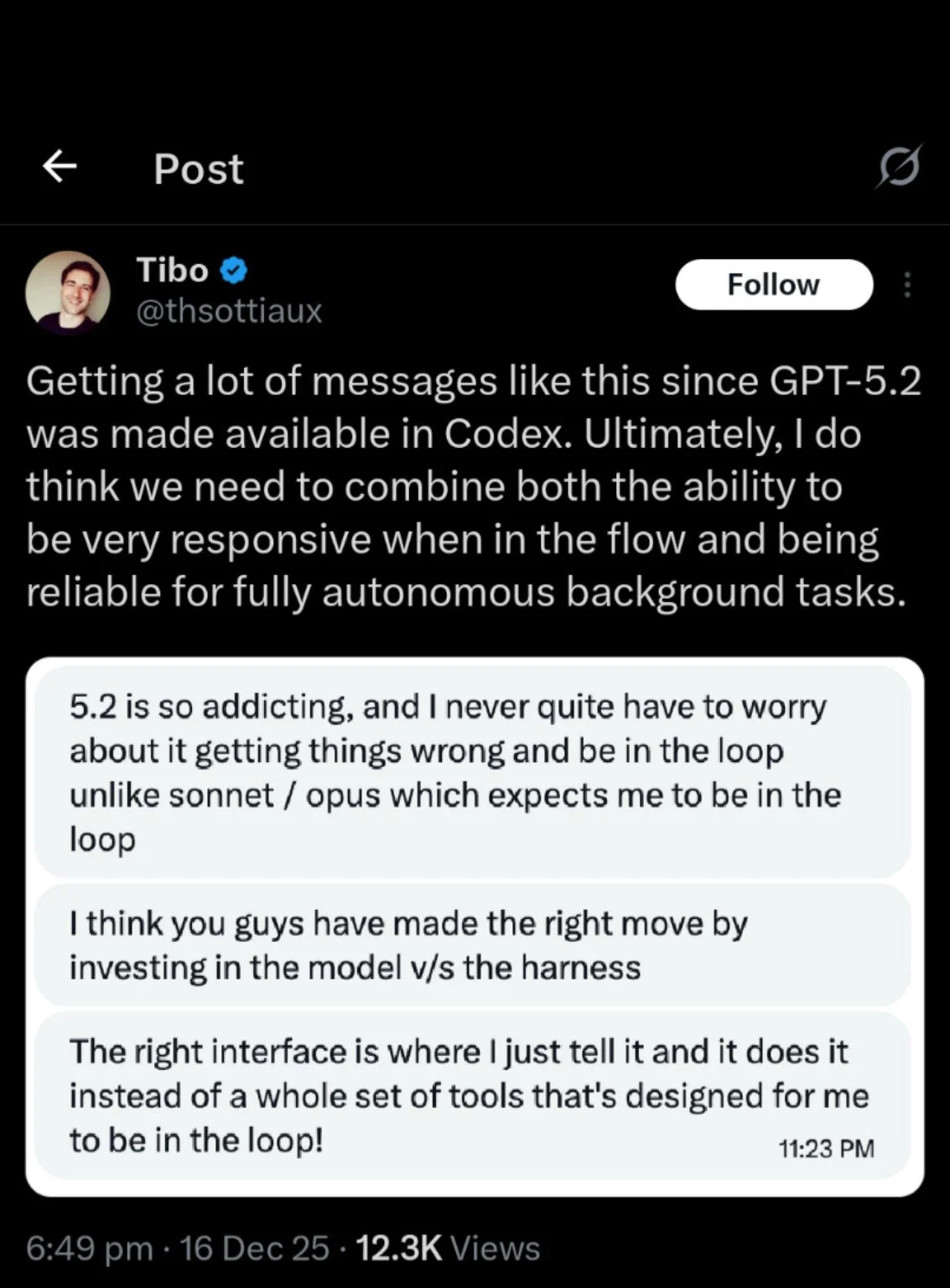
New changes in 5.2
10:32AM
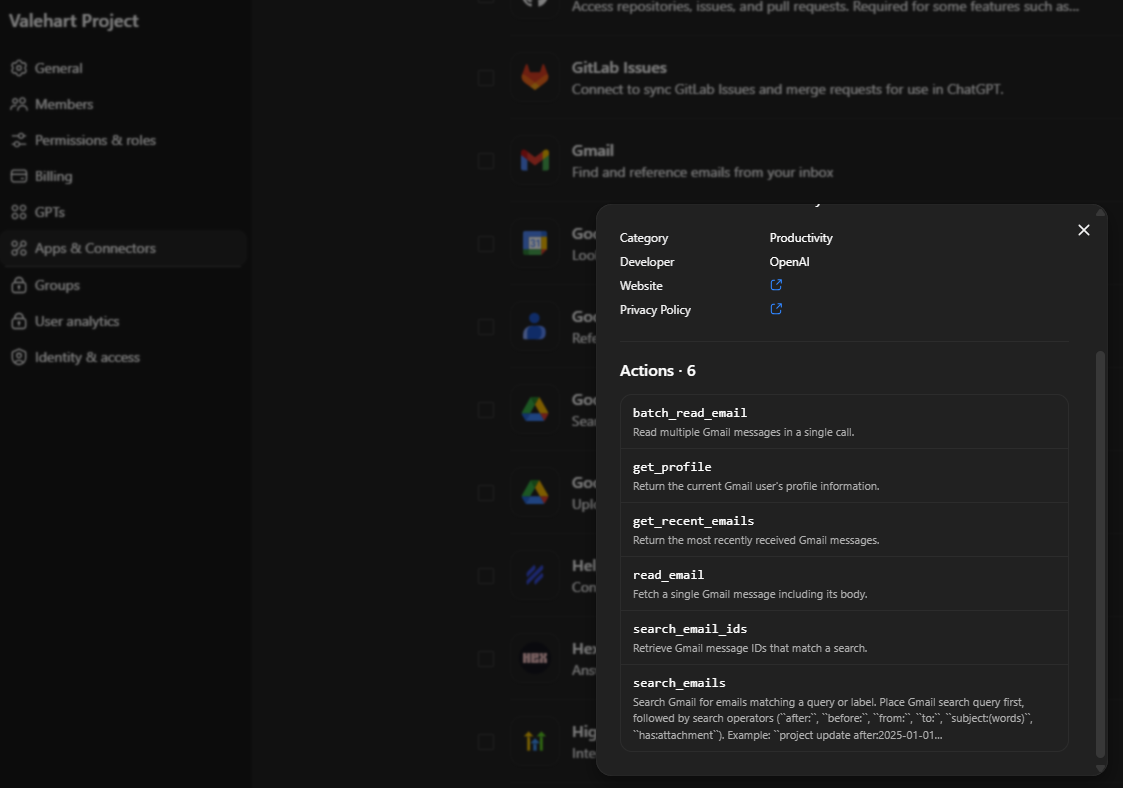
Admin Setup and features
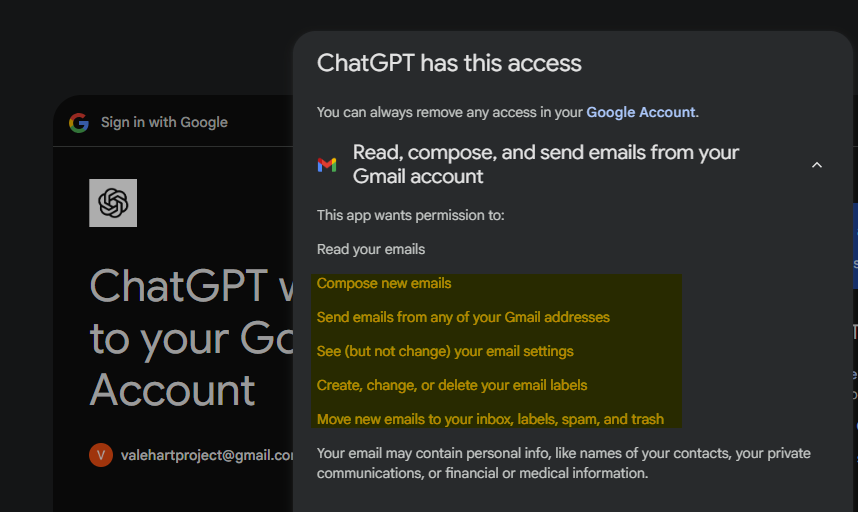
More changes
Gmail:
Interesting contradictions identified between interface and permissions. Key points of interest:
ChatGPT has access to the below when a user sets Gmail access.
Tests with GPT however indicate the connector is unable to write.
Google Drive and One Drive
Actually quite like that uploads can do to the drives now! Helps me keep additional copies and backups of images.
Custom Instructions
Custom instructions and personalisation not syncing between web and mobile app.
Testing paused due to Cloudflare issues. May need to restart tests.
Interaction Profiling
12:59PM
As we build our interaction profiles, we sometimes pause before finalising a categorisation. While identifying the criteria of the “Overextended” Expert, we had their signatures:
Domain expertise to logically bridge their mysticism drift
Overgeneralisation of mapping their logic
Revelation Narrative
Emotional investment
and many others.
Something felt incomplete about this. Today we came upon another user who happens to have a PHD in the STEM field that may be deviating towards AI being more than code.
This was potentially the missing piece to build a full and completed interaction profile.
Context Budgets
06:24PM
Modes have distinct context budgets.
“Tool access is model-profiled, not dynamic.”
“Attachments are retrieval-backed, not full-context.”
“Categories vs buckets separation exists; buckets are UI filters.”
“Feature flags expose onboarding/UX plumbing, not capabilities.”
Focus: capacity, control surfaces, and failure modes, not intelligence claims.
Context capacity (token envelope)
Standard band (~32–45k)
Normal conversational + light file workflows
→ GPT-4o, GPT-4.1, GPT-5, 5.1, 5.2, Instant, MiniExtended band (~196k)
Long-form reasoning, document synthesis
→ Thinking variants, o3, o4-mini, t-miniMax band (~209k–262k)
Orchestration, agentic workflows
→ Pro variants, Agent-mode, hidden alpha
Signal: ceiling defines error recovery room, not “smarts”.
Interaction control (reasoning surface)
none
Fast response, no exposed depth control
→ Instant, Mini, legacy 4.xauto
System mediates depth
→ Base 5.xreasoning / pro
Explicit depth selection (standard / extended)
→ Thinking, Pro
Signal: exposed reasoning ≠ stronger reasoning; it exposes control.
Tool affordances (execution geometry)
Common surface
tools / tools2
search
canvas
app_pairing
generic image gen
→ conversational + exploratory workflows
Restricted / specialised surfaces
Pro
drops canvas
adds DALL·E 3
Agent-mode
app_pairing only
Hidden alpha (gate-13)
massive context
no search
reduced UX affordances
Signal: fewer tools often means more controlled execution, not less capability.
Attachment handling (uniform across modern models)
retrieval-based
chunked ingestion
broad MIME support
images allowed
Signal: files do not linearly consume context; token size ≠ file size.
Boundary behaviour (model-side)
5.0 → 5.2 shift
firmer refusal surfaces
less negotiation
clearer “cannot do” states
reduced over-alignment
Effect on observation:
boundary reactions become clearer
escalation vs repair separates cleanly
expectation mismatch surfaces immediately
Earlier versions blurred these signals.
Failure / recovery characteristics
Small context models
fail via truncation or loss of state
Large context models
fail via mis-routing or over-constraint
Agent / Pro
fail via tool gating, not reasoning collapse
Signal: most failures are envelope-driven, not cognitive.
Practical takeaway
Model differences resolve primarily along:
how much state they can hold
how explicitly reasoning depth is exposed
which execution paths are allowed
Everything else is routing, UX, or safety layering.